What to Release Mentally
Have you ever felt like your mind just… won’t quiet down?
Not in a dramatic way. Just constant. Thought after thought, jumping from one thing to the next. Things you said. Things you should’ve said. Things you need to do. Things you’re worried about.
I have those days way too often. Nothing major has ever happened—by the afternoon, ZI would feel drained. And I always think, why am I this tired?
It’s not physical. It was everything I carried mentally.
That’s the part we don’t always talk about. We clean our homes, organize our schedules, plan everything out… but our minds? We just keep piling things in there.
At some point, something has to be released.
What Is Mindful Decluttering?
It’s not complicated.
Mindful decluttering is just noticing what’s sitting in your mind—and deciding what actually needs to stay there.
No pressure to “fix” yourself. No forcing anything away.
Just awareness… and a little honesty.
Because if you’re being real with yourself, you already know what’s been weighing on you.
Why This Even Matters
When your mind is full, everything feels harder than it should.
You reread the same thing three times.
You forget small things.
You feel irritated and don’t really know why.
And sometimes, you just feel off.
That’s usually a sign you’re carrying more than you need to.
Mindful Decluttering Techniques
1. Notice What You Keep Replaying
We all have those thoughts that keep looping.
Something someone said.
A situation that didn’t sit right.
A mistake that still lingers.
If it keeps coming back, it’s taking up space.
One thing that helps—just write it down exactly how it sounds in your head. No editing.
It might not even make sense on paper, but you’ll see it more clearly.
2. Sit With Yourself for a Minute
Not your phone. Not a distraction. Just you.
Even a few minutes.
At first, your mind might feel even busier. That’s normal.
But give it a second… things start to settle a bit. You start noticing what’s actually there instead of just reacting to it.
3. Let Thoughts Come and Go
This one took me a while to understand.
Every thought doesn’t need your attention.
You don’t have to analyze it. You don’t have to follow it all the way through.
Sometimes it’s enough to notice it and let it pass.
Like, “okay… that’s there,” and keep it moving.
What to Release Mentally
This is the part that really makes a difference.
Because once you see what you’re holding onto, you get to choose what stays.
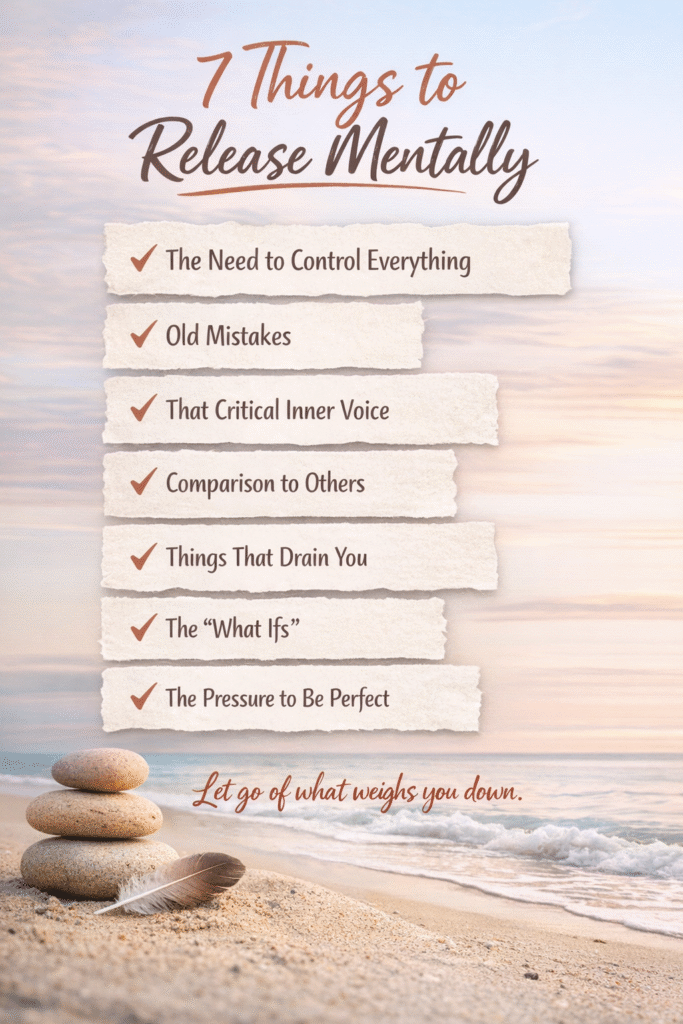
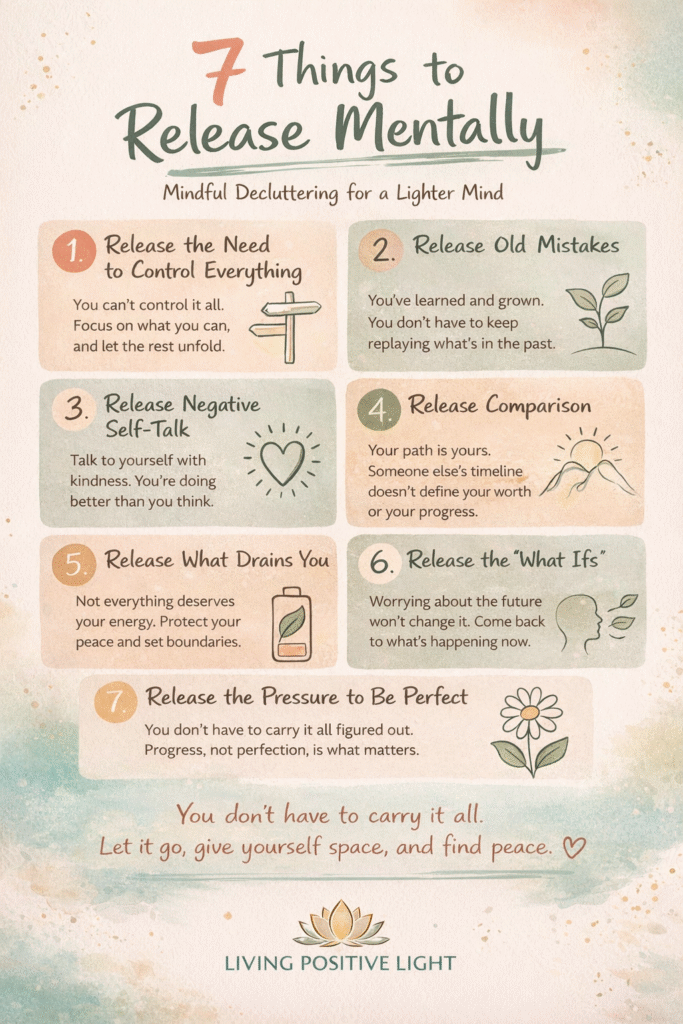
1. Release the Need to Control Everything
Trying to control everything will wear you out.
How people act. How things turn out. How your life “should” look.
Some things are just not yours to manage.
And honestly, letting go of that control—even a little—can feel like relief.
2. Release Old Mistakes
You’ve probably replayed certain moments more times than you can count.
I know I have.
But at some point, you have to ask yourself… what am I still holding onto this for?
You already learned what you needed to learn.
You don’t have to keep punishing yourself for it.
3. Release That Critical Voice
That voice in your head that’s always pointing out what you didn’t do right?
Yeah… that one.
It gets comfortable if you don’t check it.
Start paying attention to it. Not to fight it—but to question it.
Because a lot of the time, it’s just repeating things you picked up over time. Not actual truth.
4. Release Comparison
It’s so easy to feel like you’re behind.
You look around, and it seems like everyone else is moving faster, doing better, figuring things out quicker.
But you’re seeing a small piece of their life… not the full picture.
You’re allowed to move at your own pace.
5. Release What Drains You
Some things just take more from you than they give.
Certain conversations. Certain expectations. Even certain habits.
If something consistently leaves you feeling off, it’s worth paying attention to that.
You don’t have to keep carrying it just because you always have.
6. Release the “What Ifs”
“What if this doesn’t work out?”
“What if I mess this up?”
“What if I made the wrong choice?”
Those thoughts can go on forever.
And most of the time, they don’t lead anywhere helpful.
Try bringing yourself back to what’s actually happening right now.
That’s the only place you can really do anything anyway.
7. Release the Pressure to Have It All Together
You don’t need to have everything figured out.
Seriously.
Some days will feel clear. Some won’t.
Some days you’ll feel focused. Other days, not so much.
That’s normal.
Give yourself a little room to be in progress.
A Small Daily Reset
When your mind starts feeling crowded, try this:
Pause for a second.
Ask yourself,
“What am I holding onto right now that I don’t actually need?”
Pick one thing. Just one.
And decide… you’re not carrying it for the rest of the day.
That’s enough.
Helpful Resources
- Keep a journal nearby and use it to clear your thoughts when your mind feels full.
- Try short meditation sessions focused on letting go—nothing long, even 5 minutes helps.
- Read The Untethered Soul for a deeper understanding of releasing mental attachments. You can find the book on Amazon or other retailers.
- Set a daily reminder to check in with yourself mentally, not just your to-do list.
- If you’re on a journey of letting go and growing inward, you may also enjoy my post on 7 Rules of Life, where I share simple reminders to help you move with more peace, clarity, and intention each day
Final Thoughts
You don’t have to carry everything that crosses your mind.
Some thoughts can pass through without staying.
Some situations don’t need to follow you into the next day.
And the more you start letting things go—even little things—the lighter you’ll feel.
Not overnight. But gradually.
And that shift? You’ll notice it.
Keep shining—your light makes a difference.
~Kay~