
Perfectionism doesn’t always look like vanity or ego.
Sometimes it looks like a woman who genuinely wants to do things well… but feels like she can’t breathe unless everything is “right.” It looks like the long pause before starting. The constant revising. The quiet guilt when you don’t follow through the way you planned. The pressure to prove—something, to someone, even if nobody asked.
And for a lot of us, perfectionism isn’t obvious. It’s subtle. It can sound like wisdom.
- “Let me wait until I’m in a better headspace.”
- “I need to get organized first.”
- “I should fix a few things before I start.”
- “If I can’t do it consistently, I don’t want to disappoint myself again.”
But here’s the truth perfectionism doesn’t want you to learn:
You don’t need perfect conditions to make progress.
You need a willing heart and one next step.
Progress is how peace is built.
Progress is how habits become real.
Progress is how your life shifts—not through big dramatic overhauls, but through small faithful choices that add up.
If you’ve been carrying the weight of “I should be further by now,” this is your reminder:
You’re not behind. You’re human.
And you can start again—softly.
What Perfectionism Really Is (It’s Not Just “Wanting Things Nice”)
Perfectionism is often described as wanting excellence. But it’s rarely just about doing your best.
Perfectionism is usually about avoiding discomfort.
It’s about trying to protect yourself from:
- judgment
- embarrassment
- rejection
- regret
- feeling out of control
- feeling “not enough”
So you aim for flawless, because flawless feels safe.
But flawless is a moving target. It never stays satisfied.
Perfectionism says:
- “Not like that.”
- “Not yet.”
- “Not until you’re fully ready.”
- “Not until you can guarantee it’ll work.”
And because you can’t guarantee life, perfectionism keeps you in a loop of almost.
Almost ready.
Almost consistent.
Almost confident.
Almost healed.
Almost there.
Meanwhile, your peace gets postponed.

The Hidden Ways Perfectionism Shows Up in Everyday Life
Perfectionism doesn’t only live in big goals. It lives in small moments too.
1) Over-preparing
You research so much that you don’t start.
You plan so long that you run out of energy.
You gather supplies, tools, notebooks, apps—hoping the “right setup” will make it easier.
Preparation isn’t bad. But if preparation becomes a hiding place, it keeps you stuck.
2) Over-editing
You rewrite your message five times.
You change your mind about your plan ten times.
You keep tweaking your idea until it loses its spark.
And then you’re left with the familiar feeling: I’m exhausted… and I still haven’t moved forward.
3) Restarting instead of returning
Perfectionism loves a clean slate.
It loves the drama of “starting over” because it feels fresh and hopeful.
But real growth doesn’t require constant restarting. It requires returning.
Returning is humble. Returning is steady. Returning is powerful.
4) Comparing your behind-the-scenes to someone else’s highlight reel
This one is quiet but sharp.
You look at someone else’s consistency, their glow, their productivity—and you assume they never struggle.
So, you pressure yourself to “catch up.”
But you’re not in a race.
It’s your life.
5) Turning your worth into a scoreboard
Perfectionism often ties identity to results:
- “I’m only doing well if I’m consistent.”
- “I’m only proud of myself if I’m productive.”
- “I’m only worthy if I’m improving.”
That is not peace. That is performance.
And you were never meant to live like you have to earn your value.
Why Perfectionism Feels Spiritual Sometimes (But Isn’t the Same as Wisdom)
This is important—especially for Living Positive Light.
Sometimes perfectionism tries to hide behind faith language:
- “I’m waiting on God.”
- “I need clarity first.”
- “I want to be sure it’s His will.”
- “I’m praying about it.”
And yes—prayer and discernment matter.
But here’s the difference:
Faith moves.
Perfection waits for certainty.
There’s a gentle bravery in faith. Even when you don’t see the full staircase, you take the step you can see.
Perfectionism demands a full map.
Faith obeys the next instruction.
If you’ve been stalled out, ask yourself kindly:
- Am I truly waiting on God… or am I waiting to feel safe?
- Am I avoiding this because I need wisdom… or because I fear discomfort?
No shame—just honesty.
Honesty is healing.

Progress Is a Practice (Not a Mood, Not a Personality Trait)
Progress isn’t something you “have.” It’s something you choose.
And the reason progress is so powerful is because it doesn’t depend on motivation.
Progress can happen on:
- tired days
- busy days
- emotional days
- messy days
- low-confidence days
Progress doesn’t require you to be your best self.
Progress only asks for your next self.
The version of you who says:
“Today I’m showing up in a small way.”
That version is enough.
The All-or-Nothing Mindset (And Why It Breaks So Many Good People)
Perfectionism is best friends with all-or-nothing thinking.
It says:
- “If I can’t do it perfectly, I won’t do it at all.”
- “If I missed a day, I failed.”
- “If I can’t stick to it, why start?”
But growth isn’t built through perfection.
It’s built through repetition.
A baby doesn’t learn to walk by getting it right the first time.
They fall, they wobble, they try again.
And nobody calls them a failure.
So why do we talk to ourselves like we’re not allowed to learn?
A healthier truth:
Inconsistency is not proof you can’t do it.
It’s proof you’re still learning how.
A Faith-Led Reminder: God Works Through Imperfect People (Always Has)
This is one of the most comforting truths about scripture:
God has never waited for people to become perfect before using them.
He works with:
- the unsure
- the tired
- the messy
- the late bloomers
- the ones who have to try again
Your imperfections do not disqualify you.
If anything, they create space for grace.
You don’t have to be flawless to be faithful.
You just have to be willing.
The Real Goal: Peaceful Consistency, Not Perfect Performance
Perfectionism makes you chase performance.
Progress invites you into a rhythm.
A rhythm is gentler than a rigid routine.
A rhythm has room for real life.
Rhythm says:
- “I can adjust and still remain committed.”
- “I can do the small version today.”
- “I can return without punishing myself.”
This is where sustainable growth lives.
Not in intensity.
In consistency.
Not in pressure.
In peace.
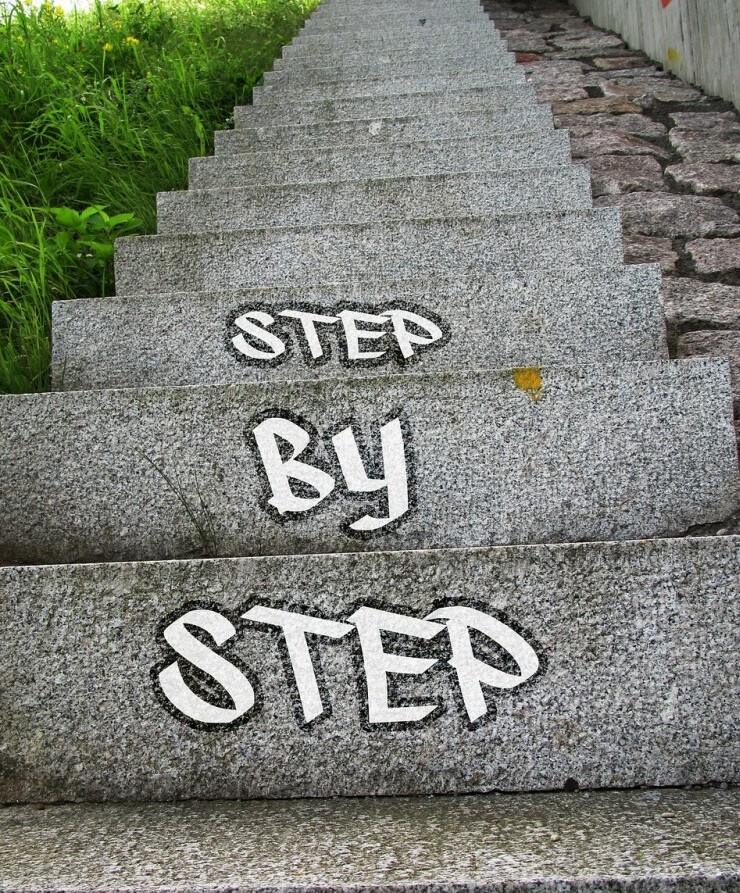
How to Choose Progress Over Perfection (Step-by-Step, Real Life Edition)
Here are practical ways to shift—without overwhelming yourself.
1) Name your “perfection voice”
Perfectionism has patterns. When you can identify yours, you can interrupt it.
Common perfection thoughts:
- “It’s not good enough.”
- “People will judge me.”
- “I always mess up.”
- “If I start, I have to finish.”
- “If I do it wrong, I’ll regret it.”
When you hear that voice, don’t panic.
Just name it:
“That’s perfectionism talking.”
Naming creates distance. Distance creates choice.
2) Choose a “minimum viable step”
Instead of asking “What’s the perfect plan?” ask:
“What’s one small step that still counts?”
Examples:
- If you want to journal: write 3 lines.
- If you want to pray: pray one honest sentence.
- If you want to read scripture: read one verse and reflect for 60 seconds.
- If you want to build a habit: do it for 2 minutes.
- If you want to clean: do one surface.
The goal isn’t impressive.
The goal is repeatable.
3) Swap big goals for daily “anchors”
Perfectionism loves huge goals. Progress loves anchors.
Pick 2–3 daily anchors:
- Morning: a quick prayer + water
- Midday: a deep breath + gratitude
- Evening: a short reflection
Anchors keep you grounded even when everything else is chaotic.
4) Use the “return rule”
Make a promise to yourself:
“I will return without shame.”
This matters more than motivation.
Because the difference between people who grow and people who stay stuck is not perfection.
It’s returning.
Returning after:
- a missed day
- a bad week
- a setback
- a mood dip
Return gently. Return quickly. Return kindly.
5) Stop resetting your life every time you struggle
You don’t need a new identity to change.
You need a consistent practice.
Instead of:
“I’m starting over Monday.”
Try:
“I’m returning today.”
Monday is nice.
But today is holy too.
6) Build a “proof of progress” list
Perfectionism forgets your wins.
So keep evidence.
At the end of the day, write 3 proofs:
- “I did one small thing I said I would do.”
- “I chose kindness over criticism.”
- “I returned to my habit.”
- “I asked God for help.”
- “I didn’t quit.”
Over time, those proofs create confidence.
Because confidence isn’t something you wait to feel.
It’s something you build by showing up.
7) Practice compassionate self-talk (this changes everything)
Progress requires a safe inner environment.
If your mind is harsh, growth becomes harder.
Try swapping:
- “I’m so inconsistent” → “I’m learning consistency.”
- “I ruined it” → “I’m returning.”
- “I’m behind” → “I’m becoming.”
- “I’m not good at this” → “I’m getting better with practice.”
Speak to yourself like someone God loves—because you are.
A Soft Weekly Practice: The Progress Check-In
Once a week (Sunday or whenever you like), ask:
- What did I do this week that moved me forward—even a little?
- What felt heavy or unrealistic?
- What small adjustment would make this easier?
- Where did I notice God’s grace meeting me?
- What do I want to return to next week?
No pressure. No punishment. Just guidance.
This is how you grow without burning out.
Helpful Resources
- Read this next: Daily Affirmations to Replace Fear with Grace (use this when your mind starts spiraling into “not enough”).
- Read this next: How to Stick to a Morning Routine (practical consistency tips without the pressure).
- Look up “all-or-nothing thinking CBT” (it’s one of the most common perfectionism patterns).
- Consider a devotional on grace, renewal, and small beginnings (helpful when you need spiritual reassurance).
Final Thoughts
Progress over perfection is not lowering your standards.
It’s choosing a life that feels lighter.
It’s deciding you don’t need to punish yourself into growth.
You can grow through grace.
You can grow through steady, honest steps.
You can grow through returning.
And if you can only do the small version today?
Do it.
Small steps have a quiet kind of power.
Keep shining—your light makes a difference.
~Kay~

I’ve always taken offense to people calling themselves perfectionists as if it’s a good thing. I always knew I was one, but just thought I had to harness it like you implied. You described me perfectly. It’s funny, though, that I don’t see a whole lot of these people in real life. Of course, you never really know.
Thank you for this, Derrick. ???? I really relate to that “harness it” mindset—perfectionism can look productive until it starts costing you peace. And you’re right: a lot of people wear the label quietly. I’m glad the post made you feel seen, and I hope it helps you keep the strengths without the pressure.
Hello Kay,
This article really hit home for me because I am such a perfectionist in my own life — from organizing my homeschool schedule to trying to get every blog post “just right.” There have been so many moments where I spent way more time tweaking something than actually finishing it, just because it didn’t feel perfect yet. Reading your thoughts about choosing progress over perfection felt like a breath of fresh air and totally reminded me that done is better than perfect.
What stood out most was how you framed perfectionism as a mindset that actually slows growth instead of helping it. It reminded me of this one week when I kept reworking our homeschool plans instead of actually teaching, and by the end of the week I realized I hadn’t made real progress in either direction. Your article makes it so clear that showing up imperfectly still moves you forward, and that’s something I think so many of us need to hear. Thank you for putting this into words in such a gentle and encouraging way.
Do you find that most people struggle more with perfection in personal goals or professional ones? I’d love to hear what you see most often.
Angela M 🙂
Hi Angela,
Thank you so much for sharing this—it really means a lot. Your homeschool example is such a powerful reminder of how perfectionism can quietly hold us back.
To answer your question, I see it show up in both personal and professional areas, just in different ways—but at the root, it’s usually the same pressure to get everything “just right.”
I’m so glad the post resonated with you. Progress really is what moves us forward ????
~Kay~