Have you noticed how different the day feels when you catch a small, good thing early—a quiet breath before emails, a warm mug, a text from a friend? Gratitude won’t erase hard things, but it changes how we meet them. This is a simple, repeatable path you can begin today, even on a messy week.
What Gratitude Is (and Isn’t)—In Real Life
Gratitude is practiced attention. It’s the learned skill of noticing, naming, and receiving what is good and sustaining—right alongside what’s hard.
- What it is:
- A choice to notice (tiny or tremendous).
- A habit of naming (out loud, in a journal, or in prayer).
- A response (thanks, generosity, a text, a smile, a breath).
- What it isn’t:
- Toxic positivity. You don’t need to pretend everything is fine.
- Spiritual bypassing. You can be truthful about pain and still be grateful.
- A personality trait. It’s not “for upbeat people.” It’s trainable.
Why this matters: when gratitude becomes a skill, you can use it on rough days—not just on highlight reels.
Why Gratitude Changes Your Day (Body, Brain, and Spirit)
Your nervous system is wired to spot threats first. Gratitude gently retrains your attention to also register safety, gifts, and progress. Over time, that balance:
- Calms stress reactivity. Your body exits “constant alarm” more easily.
- Improves focus and mood. Noticing what’s working helps your brain problem-solve.
- Strengthens relationships. Appreciation spoken out loud builds trust.
- Deepens faith. Gratitude turns awareness into worship: “God, I see You here.”
Think of gratitude like strength training for attention: small, consistent reps add up.
Five Tiny Habits to Start (Keep Them Almost Too Easy)
Begin with one habit for 7 days. When it feels natural, add a second.
- First Sip, First Thanks (30 seconds).
Before your first drink or scroll, name one blessing by category: people, provision, progress, beauty, or lesson.
Example: “Progress: I sent that email I was avoiding.” - One-Line Journal (under a minute).
Each night, write a single sentence that begins with “Today I’m grateful for…”. Use a pocket notebook or a Notes app widget on your home screen.
Tip: If you forget, write two lines the next night—no guilt. - Gratitude Anchor.
Pick a daily cue you already do—brushing teeth, buckling your seatbelt, key in the door. Use it to pause for three slow breaths, then say one sentence of thanks.
Why it sticks: pairing a new habit with an existing one builds automaticity. - Thank-You Text at Lunch.
Send one short message: “I’m grateful for you because ___.” Put a repeating weekday reminder on your phone.
Impact: you’ll feel better, and your relationships will too. - Before You Reply.
When tense, silently note one thing you appreciate about the person or moment (effort, honesty, clarity, shared goal). Then respond.
Result: more constructive conversations, less reactivity.
Journal Prompts (and How to Use Them Without Freezing)
Writer’s block is normal. Use a 3–2–1 method:
- 3 moments from the last 24 hours that were helpful, kind, or beautiful.
- 2 people you appreciate and why (be specific).
- 1 challenge that’s teaching you something (name the lesson-in-progress).
More prompts to rotate through:
- What quietly worked out today that I almost missed?
- Where did I experience God’s nearness?
- What small action showed me I’m growing?
- What did my body do for me (even imperfectly)?
- Which inconvenience turned into grace?
Pro move: set a 3-minute timer. Stop when it rings. Consistency > volume.
“1-Inch Wins” You Can Finish in Under a Minute
These micro-practices are great for busy, low-energy days:
- Step outside; name three things you can see.
- Place a hand over your heart: “Thank you, body, for carrying me.”
- Touch an anchor object (ring, cross, stone) and whisper one sentence of thanks.
- Snap a photo of one ordinary good thing; add it to a “Grateful” album.
- Say a breath prayer: “Thank You for this breath. Thank You for this moment.”
Why they work: they’re small enough to do even when motivation dips.
Faith-Centered Gratitude (Short Prayers & Simple Scripture Pairings)
- Morning: “God, attune my attention to Your goodness. Help me notice and respond.”
- Workday: “In this task, show me hidden gifts and teach me patience.”
- Evening: “For what You protected, provided, and taught today—thank You.”
Scripture to weave into your practice (choose one for the week):
- Psalm 118:24 — “This is the day the Lord has made…”
- James 1:17 — “Every good and perfect gift is from above…”
- 1 Thessalonians 5:18 — “Give thanks in all circumstances…”
Write your chosen verse on a sticky note where you’ll see it often.
Common Blockers & Gentle Solutions
- “I don’t feel grateful.” Start with facts, not feelings: clean water, a working phone, a safe bed. Feelings often follow attention.
- “Life is heavy.” Let lament and gratitude share the page: “This hurts… and I’m grateful for the friend who called.”
- “I forget.” Use habit stacks: after brushing teeth → 1-line journal. After lunch → thank-you text.
- “It feels repetitive.” Rotate categories: people, places, provision, progress, beauty, lesson learned.
- “I’m too busy.” Choose a 30-second practice. Busy seasons are exactly when the smallest habits matter.
A 7-Day Starter Path (Copy/Paste and Go)
Day 1 – Tools & Comforts: List three objects that make life easier (kettle, notes app, comfy shoes). Thank God for practical provision.
Day 2 – People: Name two people who shaped you. Send one a message of appreciation.
Day 3 – Progress: Identify one problem that’s smaller than it used to be. Capture how you grew.
Day 4 – Body: Appreciate one ability today (carrying groceries, steady breathing, walking). Offer a short prayer of thanks.
Day 5 – Nature: Notice sky, light, trees, air. Take a photo and add it to your “Grateful” album.
Day 6 – Lessons: What hard thing taught you something valuable? Name the lesson and the helper.
Day 7 – Bless and Be Blessed: Write a 3-sentence note of thanks to someone—and send it.
Repeat weekly, swapping categories as needed. You’ll build a library of evidence that good is present here, too.
Make It Visible (So It Sticks)
- Notebook-on-the-nightstand or a Notes widget labeled “Grateful Today.”
- Sticky note by the kettle/coffee maker with your weekly verse + one line of thanks.
- Gratitude jar on the counter; drop a slip in nightly and read them at month’s end.
- 2-minute family round after dinner: “Name one good thing from today.”
When Gratitude Grows Up (What Comes Next)
As your practice roots deeper, it naturally expands:
- Thanks → Generosity. Gratitude often nudges us to share time, money, skills.
- Noticing → Neighboring. Seeing goodness makes us more aware of needs we can meet.
- Receiving → Rejoicing. Worship becomes reflexive: your attention becomes adoration.
Quick Resources & Next Steps
- Gratitude journal + fine-tip pens
- Simple desk timer for 2-minute evening gratitude
- Read my post Gratitude When Depressed and Gentle Routines to End Your Day with Gratitude.
Final Thoughts
Gratitude isn’t a grand gesture—it’s a quiet, repeatable choice. Start where you are, pick one tiny habit, and let it steady your attention toward what’s already good and quietly growing. On hard days, let thanks sit beside honesty; on better days, let it spill over into kindness. Over time, these small acknowledgments become a way of moving through the world—with more peace, more presence, and more grace for yourself and others.
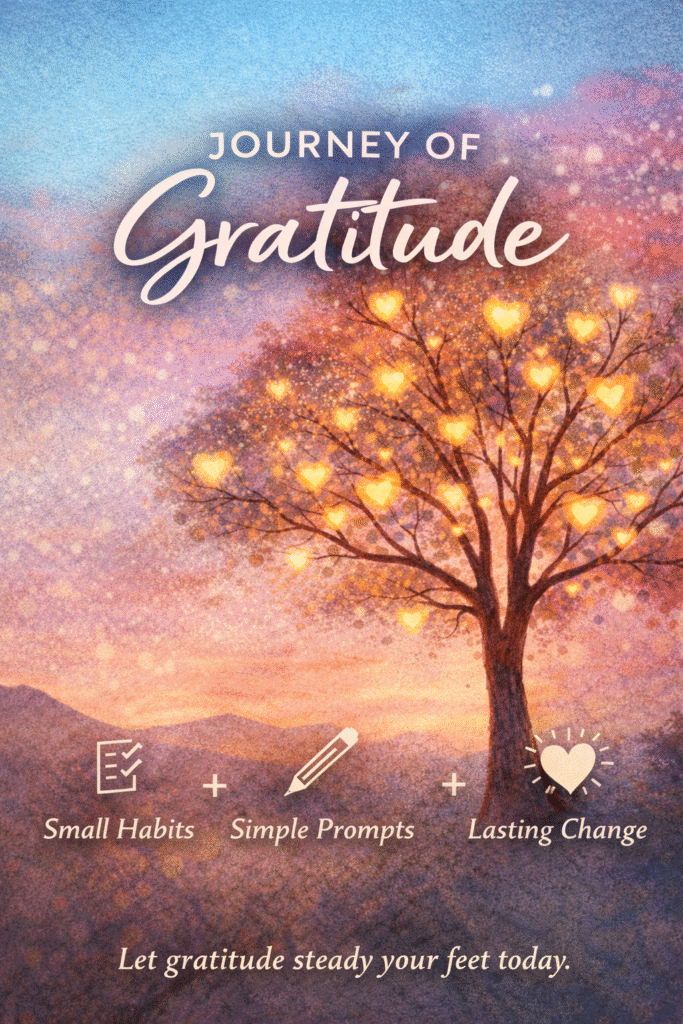
Let gratitude steady your feet today.
~Kay~