(How to Heal)

There’s a quiet ache that creeps in when you start losing yourself.
It doesn’t always happen with one big event—it’s gradual. You stop speaking up. You say “yes” when your soul whispers “no.” You become who others need you to be, rather than who you truly are.
And before you know it, you wake up one day feeling disconnected from your own heart.
If that sounds familiar, please know this: nothing about you is broken. You’ve simply been trying to survive in a world that often rewards people for self-abandonment.
But healing starts with awareness—with noticing where you’ve been silencing yourself and learning how to return home.
Here are eight signs you may be losing yourself, and gentle ways to find your way back—with faith, compassion, and courage.
1. You’re not acting according to your values
You go along with things that don’t sit right with you because it feels easier than disappointing someone. But each time you ignore your truth, you chip away at your peace.
Why it matters:
Your values are your inner compass. When you betray them, life starts to feel confusing and off-balance.
Try this:
Write down three values that mean the most to you—maybe faith, honesty, and freedom. Before you commit to anything, ask yourself:
“Does this honor what matters most to me?”
If the answer is no, pause. Choosing alignment over approval is one of the deepest ways to honor your soul.
2. You’re trying to get everyone to like you
You mold yourself to fit others’ expectations. You soften your opinions, your dreams, your edges—just to be accepted.
But the truth is, no amount of approval will ever feel enough if it comes at the cost of your authenticity.
Try this:
Ask yourself a new question:
“Do I like how I showed up?”
You’ll begin to replace external validation with self-respect.
The right people won’t require you to shrink to be loved—they’ll feel relieved when you finally show up as your whole self.
3. You apologize for everything
“Sorry” becomes your default response—for asking, for needing, for taking up space. But over-apologizing sends your mind one painful message: I’m a burden.
Try this:
Replace apology with gratitude.
- “Sorry I’m late” → “Thank you for waiting.”
- “Sorry I asked” → “I appreciate your patience.”
It’s a subtle change that rebuilds your self-worth word by word.
4. You stay quiet when something’s bothering you
You swallow your feelings to “keep the peace,” but peace built on silence isn’t real—it’s self-erasure.
What’s really happening:
Each time you hold back your truth, resentment takes root. Your body keeps the score—through headaches, tension, or emotional numbness.
Try this:
You don’t have to over-explain. You just need clarity:
“When ___ happens, I feel ___. I need ___.”
That one sentence is both boundary and healing.
5. You don’t set boundaries with others
You give, give, and give some more—then feel invisible when no one notices your effort. But boundaries aren’t rejection; they’re how love becomes sustainable.
Try this:
Choose one area of your life that feels heavy and set a small, loving boundary there.
Maybe it’s not answering work texts after 7 p.m. or saying, “I’ll think about it,” instead of “Sure.”
Boundaries are how you teach others (and yourself) that your energy deserves protection.
6. You pretend to be okay when you’re not
You smile while your heart breaks quietly behind the scenes. You tell everyone you’re fine because vulnerability feels dangerous.
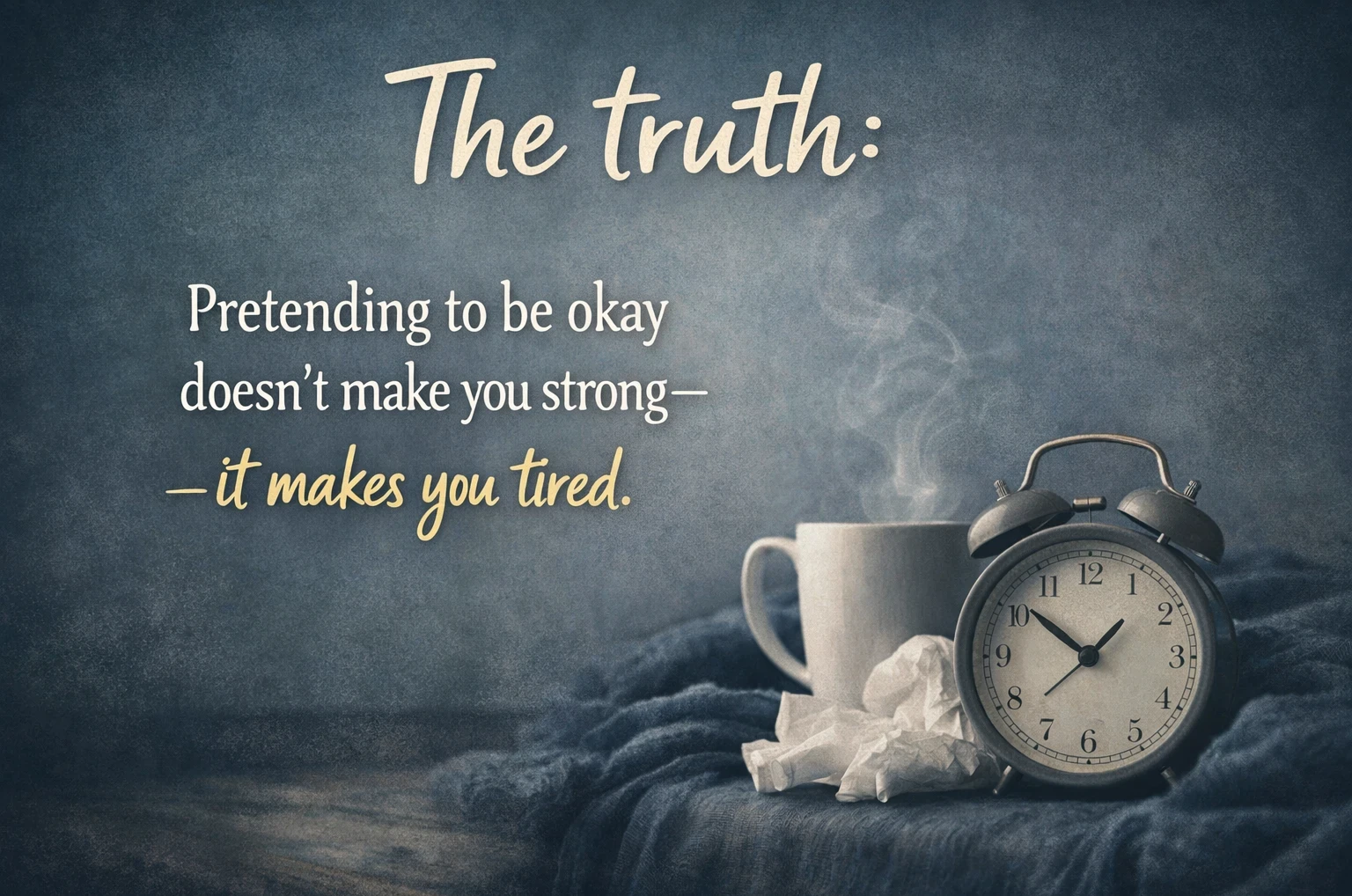
The truth:
Pretending to be okay doesn’t make you strong—it makes you tired.
Try this:
Start with honest micro-truths.
“I’m not okay today, but I’m working through it.”
“It’s been a hard week, but I’m trying my best.”
Honesty doesn’t make you weak. It lets people meet you where you are instead of where you’re pretending to be.
7. You see vulnerability as weakness
You’ve learned that independence is safety. You’d rather carry everything yourself than risk being hurt again.
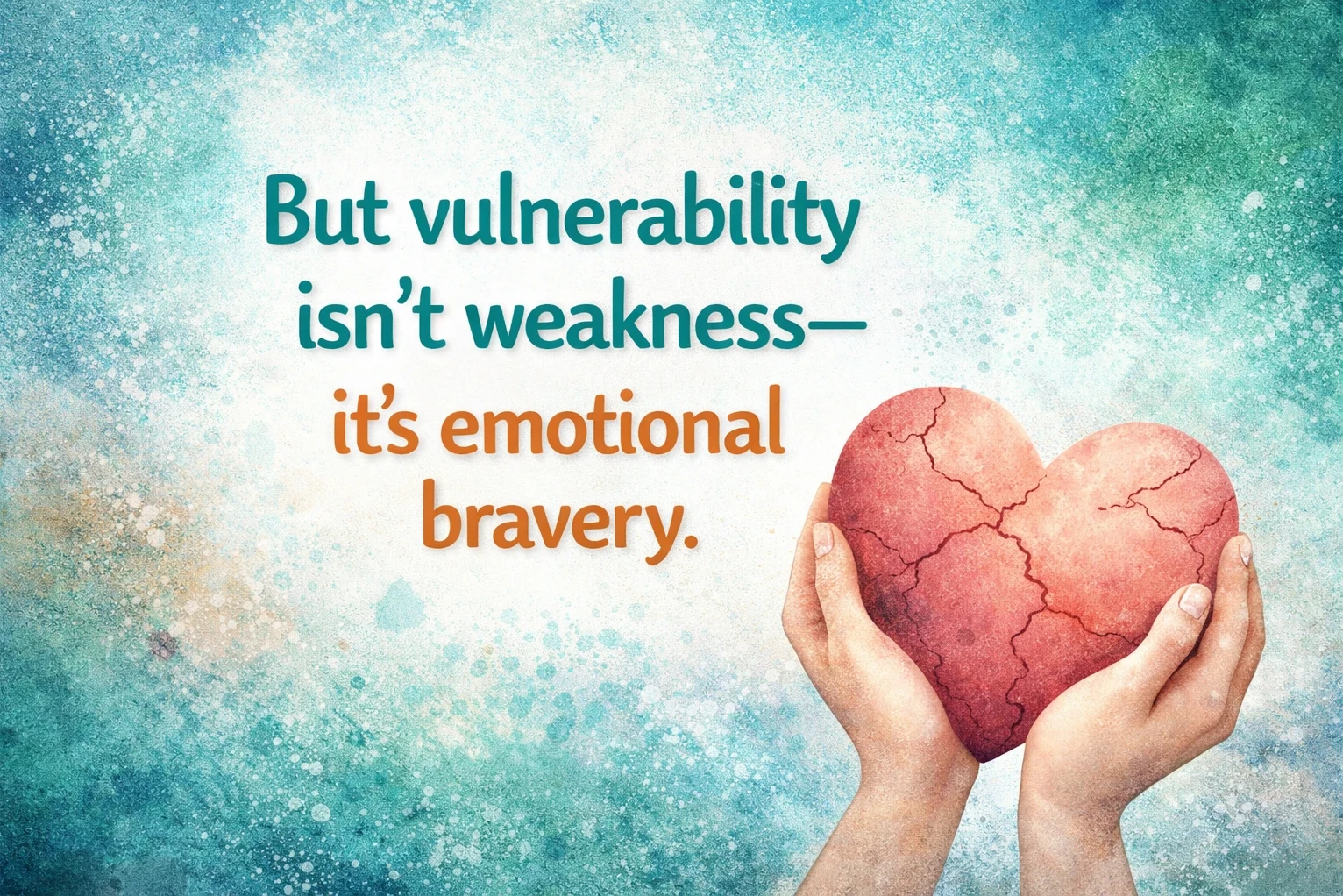
But vulnerability isn’t weakness—it’s emotional bravery.
Try this:
Let one trusted person in. Tell them, “I could use support right now.”
Even small moments of truth create space for healing to breathe.
You don’t need to face life alone. Strength doesn’t mean being untouched—it means being open and still standing.
8. You take responsibility for everyone’s emotions
You overextend yourself trying to make everyone comfortable. You take on their expectations, moods, and disappointments as if peace depends on your performance.
The truth:
You are responsible for your peace, not everyone else’s reactions.
Try this:
When you feel guilty for saying no or prioritizing yourself, remind your heart:
“Their emotions are theirs. My peace is mine.”
Love doesn’t mean losing yourself—it means learning to care without carrying.
A quiet reminder
Maybe no one ever taught you that it’s safe to take up space. Maybe you learned love by earning it, not by receiving it freely.
But you can unlearn that.
Healing doesn’t mean you never lose yourself again—it means you recognize it sooner and return quicker, with gentleness instead of guilt.
Coming home to yourself isn’t selfish. It’s sacred work.
A faith-filled reflection
God never asked you to disappear to prove your love.
He doesn’t expect perfection—He desires presence.
When you choose truth over pretending, He meets you there.
Even when you’re weary, even when you don’t have the words.
“Lord, help me stop abandoning the person You created me to be.”
That prayer alone is the start of restoration.

Gentle ways to start healing
- Pause before saying yes. Ask if it’s love or fear that’s answering.
- Let honesty be your habit. Speak truth softly but consistently.
- Give your body a voice. Rest when you’re tired. Eat when you’re hungry. Cry when you need to.
- Forgive yourself. You weren’t betraying yourself on purpose—you were surviving with the tools you had.
- Do one small act of self-trust daily. It might be journaling, prayer, or saying no with kindness.
- This emotional healing workbook on Amazon may be helpful if you want practical prompts and exercises to work through what you’ve been carrying.
- If you’re looking for a faith-filled way to slow down and reconnect, this prayer journal on Amazon can help you create a more intentional quiet time.
Tiny, consistent choices are how you rebuild the bridge back to yourself.
Conclusion
You don’t have to keep proving your worth through exhaustion.
You are allowed to slow down, set boundaries, and tell the truth about how you feel.
Losing yourself isn’t the end—it’s simply the invitation to begin again.
One breath, one boundary, one prayer at a time.
Helpful Resources
- Read next: 10 Mindset Shifts to Find Freedom and Rest
- Try this: Daily Affirmations to Replace Fear with Grace
- Grab on Amazon: 30 Days of Gratitude Prompts
- Explore: How to Set Boundaries with Compassion
Breathe, soften, and trust the next gentle step.
~Kay~
Great reminder to set healthy boundaries and follow them routinely. I have been trying to break many of these recently myself, especially being silent or pretending to be ok, and not letting others know where that boundary is for me. I have learned to stop apologizing for everything, especially when I did nothing wrong; it was easier than I expected. I try not to commit to anything if I am not certain, and to be more expressive and make sure I am not being too subtle. Great gentle reminders as well, I think it’s most important to be honest to yourself and set firm boundaries and then to express them to others, so that a pattern is not started.
Thank you for sharing this—it’s so honest and powerful. I love how you’re actively practicing these boundaries, especially speaking up and letting go of unnecessary apologies. That shift alone can be so freeing. You’re absolutely right—being honest with yourself and clear with others is where real change begins.
Thank you, Kay.